Naval Innovations / Marine systems
Autonomous submarine battery
A custom lithium-ion battery architecture for an autonomous submarine platform.
About the project
An autonomous submarine needs a compact, dependable power system. I designed a waterproof 150-cell lithium-ion battery pack for a 7.6 kW system, with an electrical architecture targeting operation at depths of up to 1,000 feet.
Battery architecture and packaging
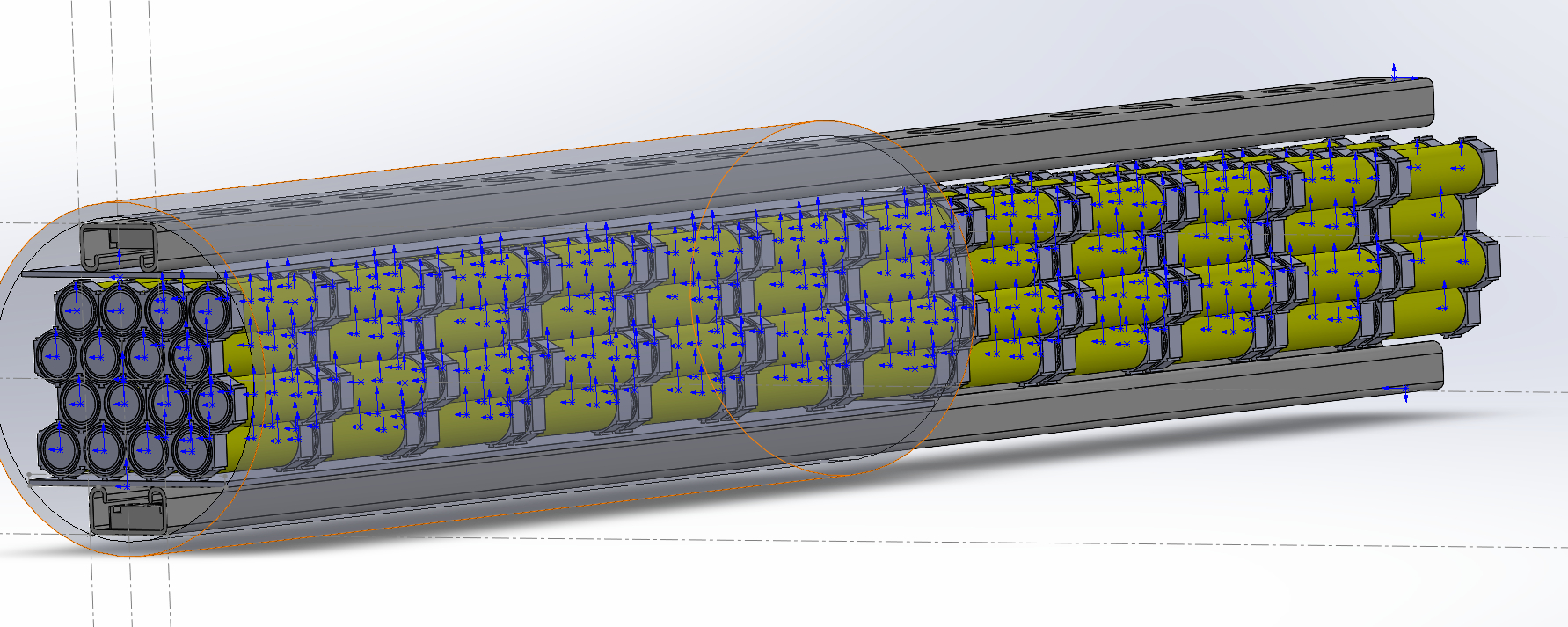
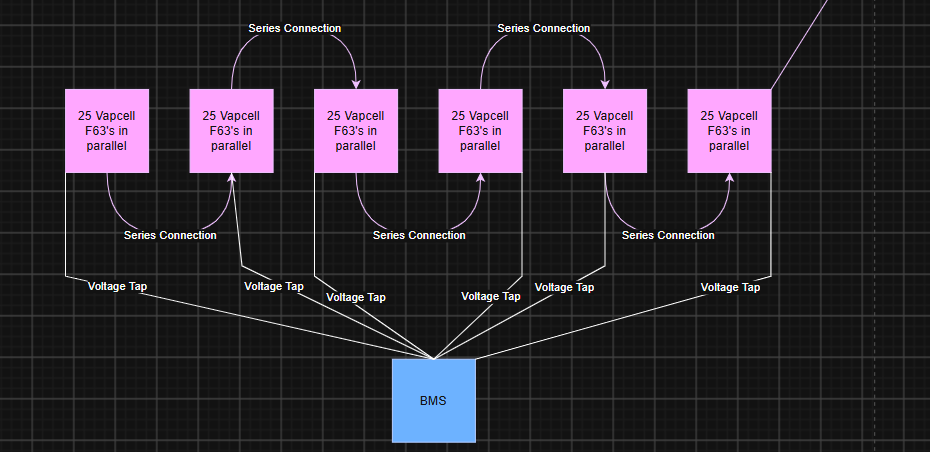
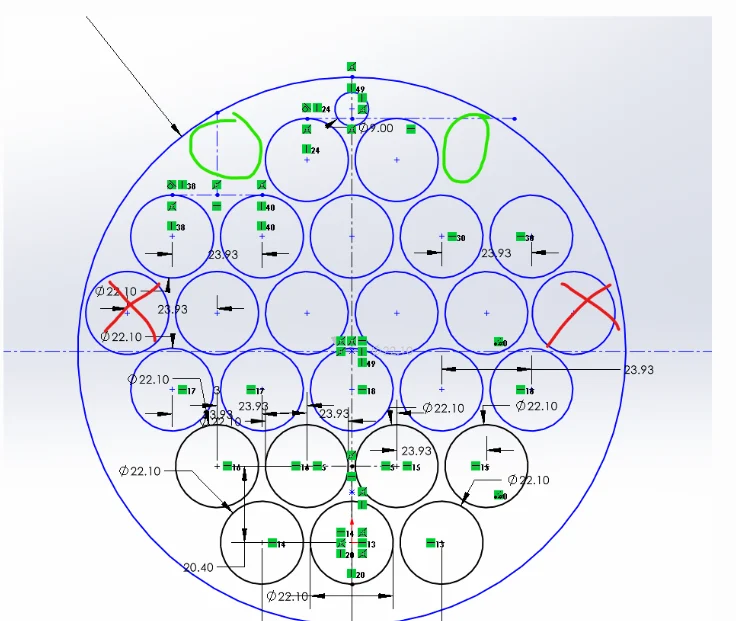
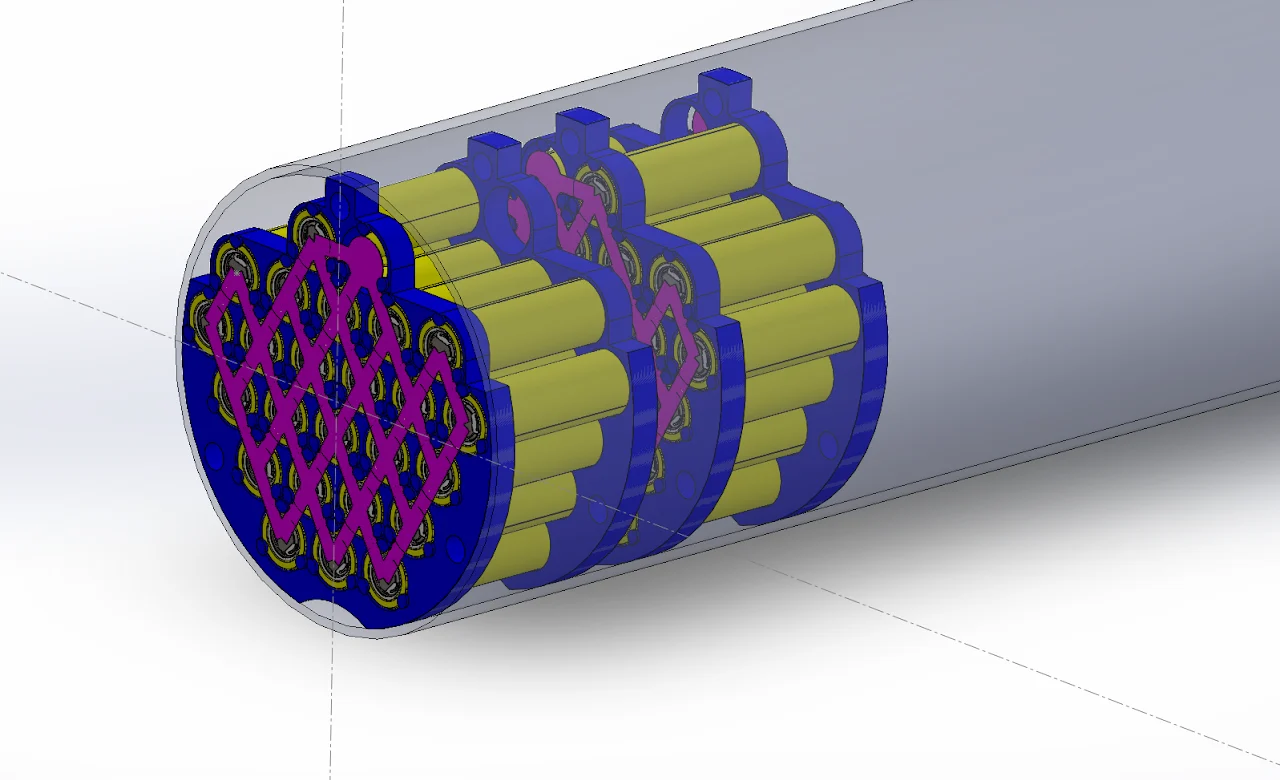
As Power Systems Team Lead at Naval Innovations since September 2025, my work covers the battery pack, its management electronics, and the electrical architecture for the autonomous submarine. The 2025 CAD model shows how the cylindrical cells, supports, and enclosure fit together. The high-level battery layout shows six series-connected groups of 25 parallel cells, with voltage taps running to the BMS.
- Designed the battery pack architecture and analyzed cell configurations.
Battery management and analysis
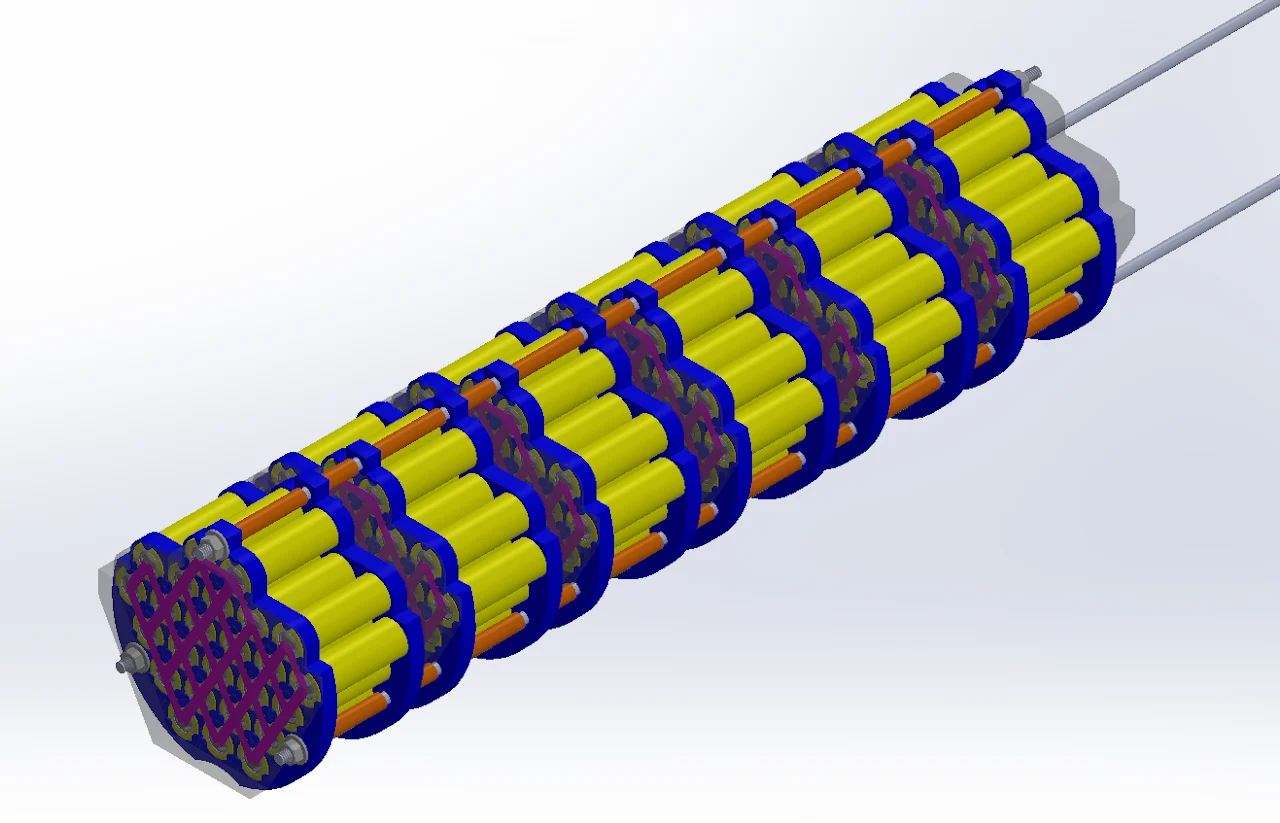
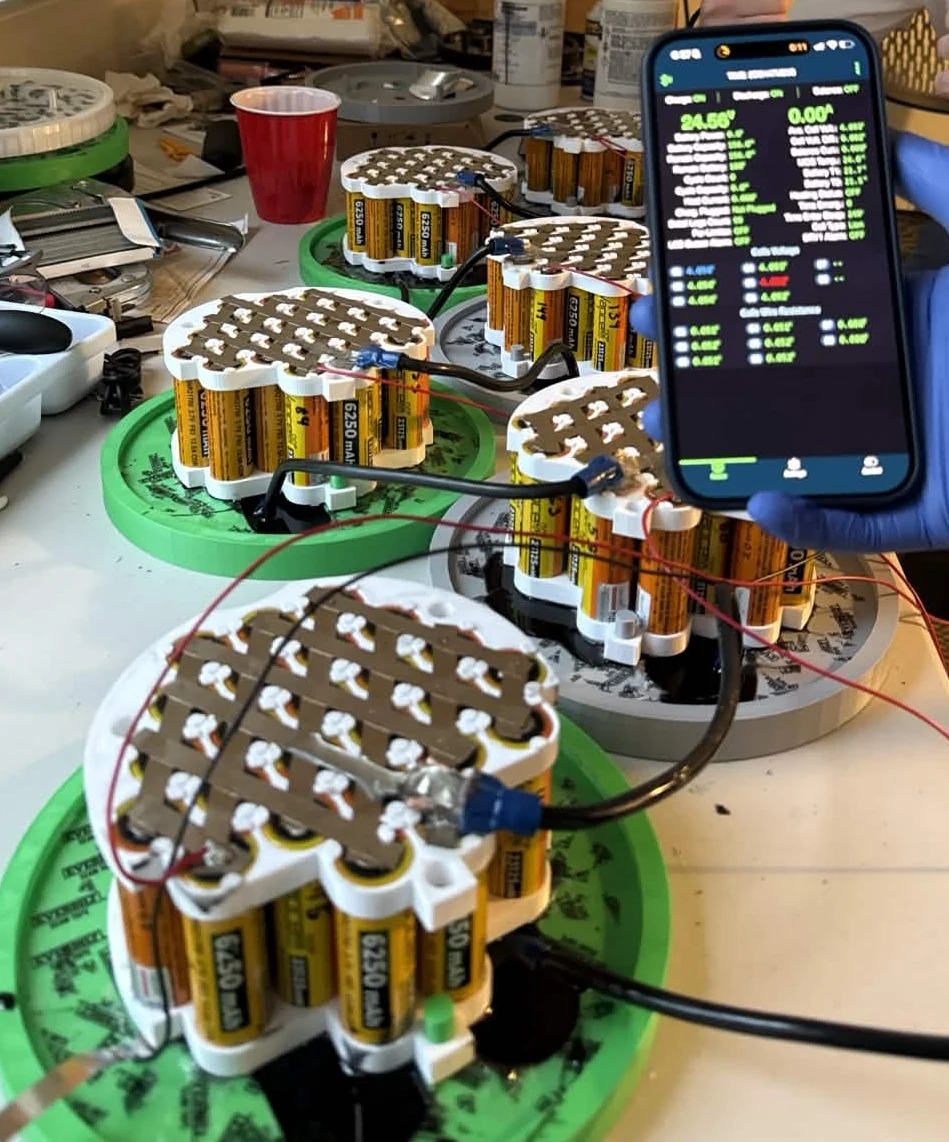
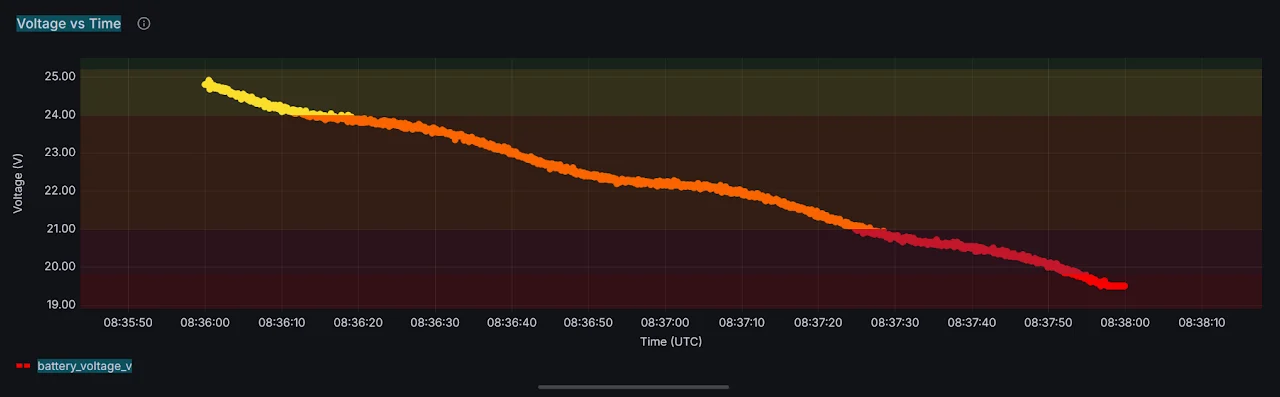
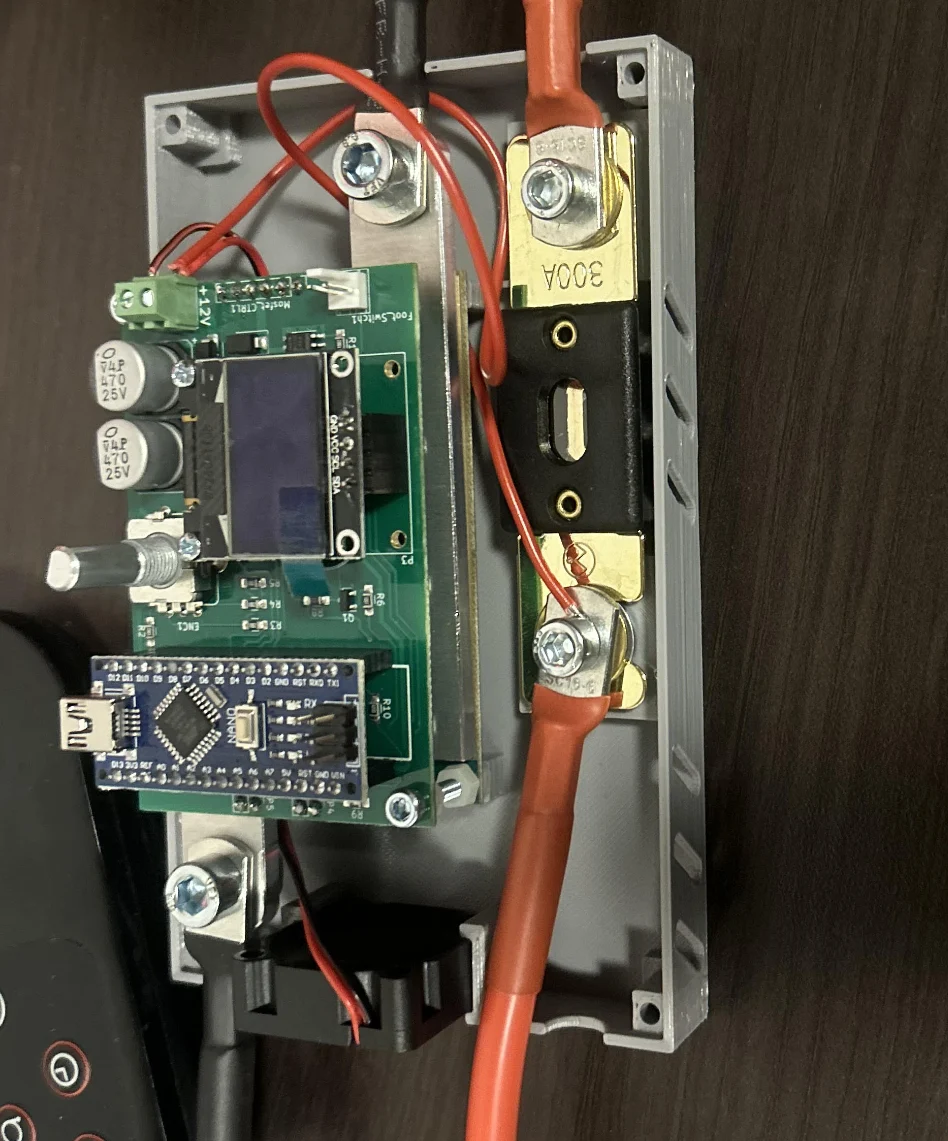
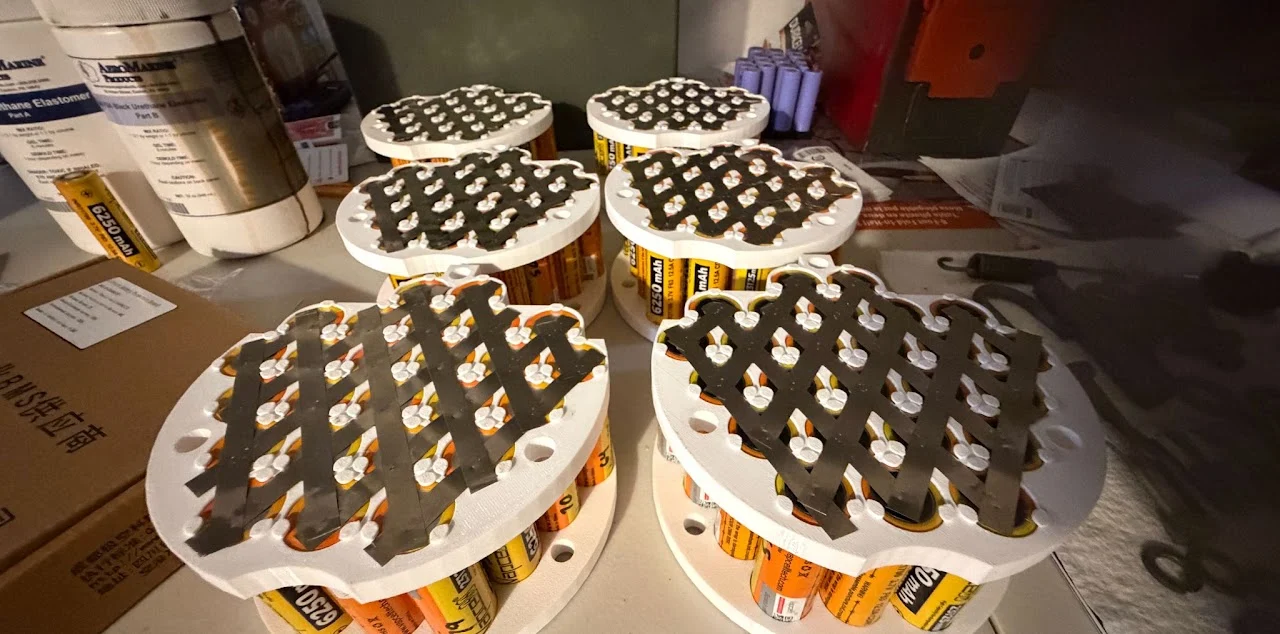
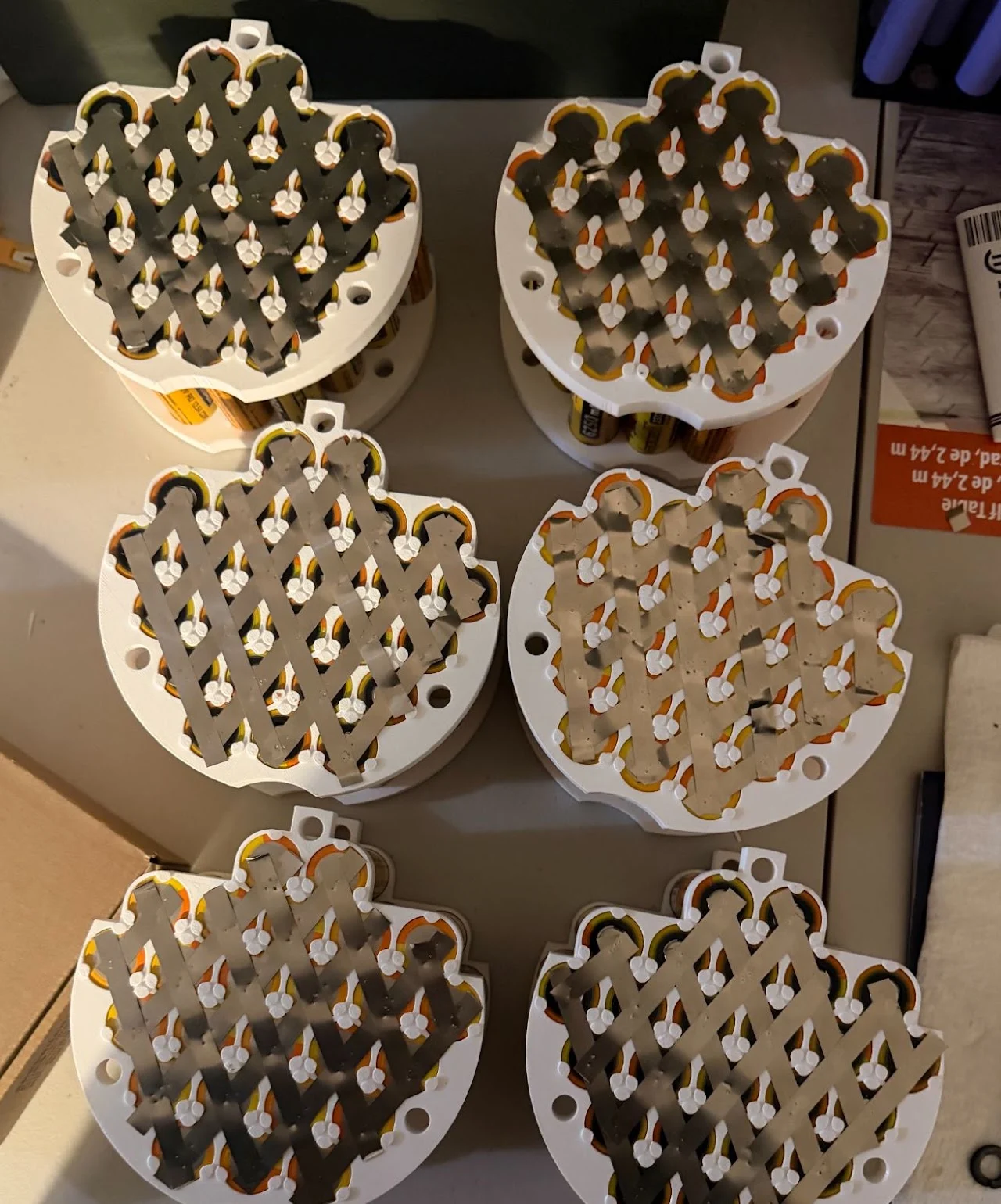
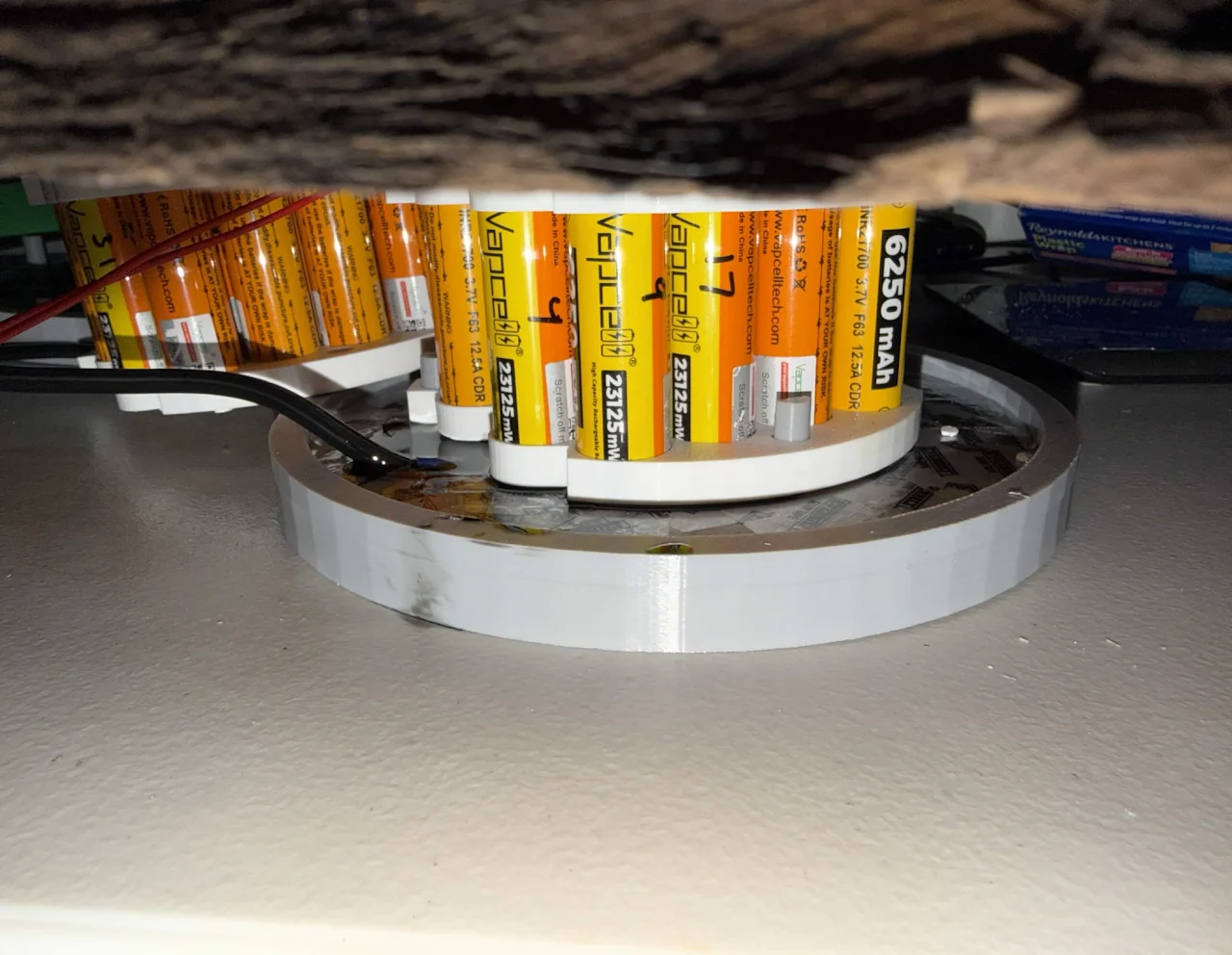
I performed battery-pack configuration analysis and integrated the calibrated the BMS for pack monitoring and cell balancing. Failure-mode analysis focused on voltage sag and thermal-runaway risks. The project gallery documents the cell arrangements, assembled modules, BMS monitoring, and battery measurement work.
- Integrated and calibrated a custom BMS for pack monitoring and balancing.
- Performed failure mode analysis addressing voltage sag and thermal runaway risks.
Custom fabrication
To manufacture the individual battery modules, I designed a MOSFET-based 600 A pulse-discharge circuit for a custom-built battery spot welder. This work connected the pack design with hands-on assembly of the lithium-ion modules.
- Designed a MOSFET-based 600 A pulse discharge circuit for custom battery spot welding.
Submarine electrical integration
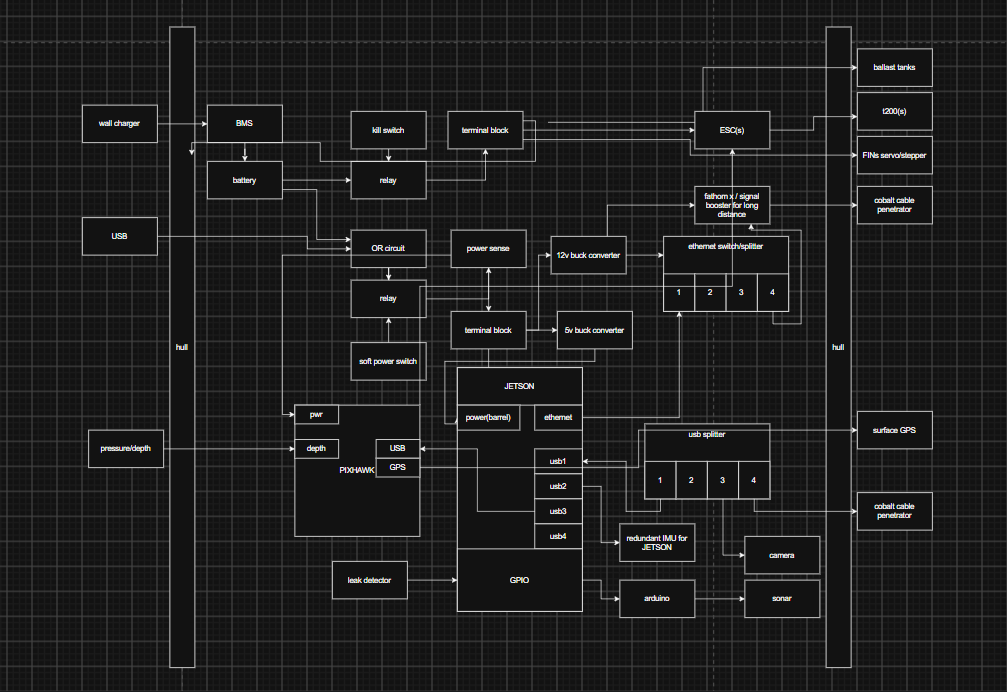
The overall system layout connects the battery and BMS with power switching, protection, distribution, and conversion. It maps power to motor controllers and auxiliary loads, alongside the Jetson, Pixhawk, Ethernet and USB connections, as well as onboard sensors. The diagrams include pressure/depth and leak sensing, GPS, camera, and sonar connections. These drawings document the electrical architecture for a platform targeting operation at depths of up to 1,000 feet.
- Developed the electrical architecture for onboard sensors.